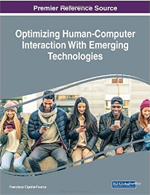
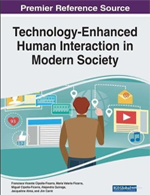
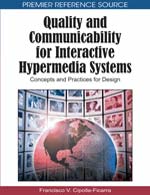
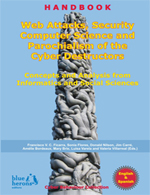
Ficarra ::: Libros :: Books :: Libri ::: 1993 :: 2012
Francisco V. C. Ficarra, PhD Editorial - Editions - Edizioni ISBN Work in progress ... |
![]() |
Centro de Tecnología Educativa (CTE). Barcelona, Spain (1993-2001)
Blue Herons: Casa Editrice. Bg, Italy (2005-10)
Nova Science Publishers. New York, USA (2010-2012)
IGI Global. Hershey, USA (2010-2013)
*** Call for Chapters ***
H
A N D B O O K
Informatics and Emerging Excellence in Education Collection
*** Additional Information ***
On an Edited Handbook to be Published by Blue Herons Editions -Informatics and Emerging Excellence in Education Collection in 2012
Title: "Computer Engineering and Innovations in Education for Virtual Learning Environments, Intelligent Systems and Communicability: Multimedia Mobile Technologies, Experiences in Research and Quality Educational Trends"
Editor: Francisco V. Cipolla Ficarra
Co-editors: Andreas Kratky (USA)
Kim Veltman (Netherlands)
Miguel C. Ficarra (Italy and Spain)
Editorial Assistants: Mary Brie (Malta) and Jacqueline Alma (Canada)
Important Dates:
:: Chapter Proposal Submission Deadline: still open
:: Proposal Acceptance Due Date: still open
:: Full Chapter Submission New Deadline: Monday, 15th June 2012
:: Planned Publishing Date: June 2012
Introduction
Currently in some college computer science teaching centres the use of the expression “educational excellence” has been intensified. These two words may really represent a high level or rather simply be a commercial or marketing catchphrase to attract the attention of future students in the context of the new technologies.
However, in order to reach that educational excellence inside the ICT and in particular in computer science and multimedia, it is necessary to count on a series of prerequisites which go beyond the aspect of putting the latest technologies in the commercial market at the disposal of the students. In this sense there are many examples where the creative and original developments, many times without any kind of economic, public or private subsidies, surpass the educational excellence which the campaigns of educational marketing sell in the on-line and off-line supports.
The current work is intended to be a union of all those people who daily work and/or develop new technologies, interactive multimedia systems, digital contents, etc., using unprecedented and innovative aspects in the teaching and learning processes, inside and outside the classrooms. That is, an intersection of computer science, telecommunications, educational sciences, pedagogy, social psychology, among other fields of the formal and factual sciences. Simultaneously, another of the main goals is to present those scientific works which are a compass in time, for all the agents who participate in the educational process and irrespective of the technological resources which are at their disposal.
All these aspects also serve to boost the horizontal and democratic level of access to international education through the new technologies, in the current era of the expansion of communicability, tending to wipe out the digital gaps stemming from financial reasons or the misuse of the social networks.
Handbook Aims
The current handbook is intended to be a first guideline for all those professionals of the new information and communication technologies. Simultaneously, another of the main goals is to present those scientific works which are a compass in time, for all the agents who participate in the educational process and irrespective of the technological resources which are at their disposal. All these aspects also serve to boost the horizontal and democratic level of access to international education through the new technologies, in the current era of the expansion of communicability, tending to wipe out the digital gaps stemming from financial reasons or the misuse of the social networks. The handbook encourages high quality chapters. Next are listed the main subjects related to the informatics and emerging excellence in education that are included in them. These subjects do not exclude others that directly or indirectly are related to them.
Scopes of Interest (not limited to):
- Advanced Classroom Technology
- Advances in Programming Languages and Techniques for Web Classroom
- Applications of New Technologies and Communicability for Virtual Education
- Assessment of Interactive Systems for Children in Education
- Augmented Reality
- Blended Learning
- Changes and Challenges in Hypermedia Systems for Education
- Cloud Assistance in Educational Contents Distribution
- Communicability
- Communication Technologies and Social Models Used in E-learning
- Computational Linguistics
- Computer Aided Education
- Computer Graphics and Computer Animation for Special Contents
- Computer-Based Learning/Training
- Computer-Supported Collaborative Learning
- Concepts and Practices for International Learning
- Cross-Cultural Comparisons of Learning Programs
- Cultural and Social Impact of Mobile Multimedia Systems for Education
- Digital Divide
- Distance Learning and Distance Teaching for Users with Physical Disabilities
- Dynamics and Statics Media for Education
- E-book
- E-entertainment
- E-government
- E-learning
- E-radio for Learning
- E-tutoring
- Educational Experiences for Information and Communications Technologies
- Educational Innovation through Knowledge Transfer
- Educational Models and Anti-Models for Emerging Society
- Empathy and Inference Theories for International Users
- Evaluation of New Generation of Computer Games for Education
- Globalization and New Barriers to Learning
- Heuristic Evaluation Methods and Techniques
- Human and Social Factors in Computer Science
- Human-Computer Interaction
- Hyperbase and Compression Methods of the Educational Information
- Hypertext, Multimedia and Hypermedia Systems
- Informatics and Pedagogical Models
- Integration of Virtual Reality and Hypermedia in Educational Contents
- Intelligent Agents and Tutoring Systems
- Intelligent User Interface
- Interactions between Industry/Enterprise and Education
- Languages and Programming Techniques for Artificial Intelligence
- Learning Management Systems
- Legislation for New Technologies
- Local and Global Interactive Design for E-learning
- Mixed Reality
- Multimedia Immersive Networked Environments
- New Digital Media Used in Preschool
- New Technological Tools and Distributed Data Bases for Education
- Open-Source E-learning Platforms
- Pedagogy and Computer Engineering Curriculum
- Pedagogical Approaches for Children, Adults and Seniors Students
- Pervasive/Ubiquitous Computing
- Quality Metrics for Educational Interactive Systems
- Reusability of the Information for Continuing Education
- Semiotics for Pedagogical Quality
- Social Factors in Videoconferencing Systems
- Social Impact of Emerging Technologies for Educational
- Social Psychology
- Sociology
- Software Architectures for Scientific Computing and Education
- Software Quality
- Technologies and Applications Emerging for Microinformatics Systems
- Technology-Enhanced Learning
- Telecommunications
- Tele-education and Broadcasting Networking Architectures
- Textual Information On-line and Discursive Analysis
- Three-dimensional Reconstruction for Education
- Training and Evaluation Methodologies
- Transfer of Know-How for Technology Used with Children
- TV Interactive
- Usability Engineering
- User-Centered Design
- Video Games for Learning
- Virtual Classroom and Virtual Campus Applications
- Virtual Museums and E-tourism for New Educational Systems
- Virtual Tutors
- Virtual World Creation for Real Simulation, Education and Entertainment
- Web 2.0
- Web 3.0
Editorial Advisory Board and List of Reviewers:
:: Abdulmotaleb El Sadik. University of Ottawa (Canada)
:: Alberto Cáceres Díaz. Universidad de Puerto Rico (Puerto Rico)
:: Alejandro Zunino. Universidad Nacional del Centro de la Provincia de Bs. As. (Argentina)
:: Alicia Mon. Universidad Nacional de La Matanza (Argentina)
:: Annie Lau. University of New South Wales (Australia)
:: Artemisa Trigueros. Universidad de La Matanza (Argentina)
:: Arturo Colorado. Universidad Complutense (Spain)
:: Beatriz Sainz de Abajo. Universidad de Valladolid (Spain)
:: Caterina Senette. IIT - National Research Council (Italy)
:: Chih-Fang Huang. Yuan Ze University (Taiwan)
:: Claudia Marcos. Universidad Nacional del Centro de la Provincia de Bs. As. (Argentina)
:: Daniel Pargman. Royal Institute of Technology (Sweden)
:: Daniela Godoy. Universidad Nacional del Centro de la Provincia de Bs. As. (Argentina)
:: Elena Durán. Universidad Nacional de Santiago del Estero (Argentina)
:: Elina Pacini. Universidad Nacional de Cuyo (Argentina)
:: Elio Ramos Colón. Universidad de Puerto Rico (Puerto Rico)
:: Emma Nicol. University of Strathclyde (United Kingdom)
:: Farshad Fotouhi. Wayne State University (USA)
:: Florian Kammueller. University of London (United Kingdom)
:: Francis C. M. Lau. Hong Kong University (China)
:: Gavriel Salvendy. Tsinghua University (China)
:: Georgios Styliaras. University of Ioannina (Greece)
:: Giulio Mori. IIT - National Research Council (Italy)
:: Graciela Hadad. Universidad Nacional de La Matanza (Argentina)
:: Graciela Vidal. Universidad Nacional de la Patagonia Austral (Argentina)
:: Guillermo Rodríguez. Universidad Nacional del Centro de la Provincia de Bs As (Argentina)
:: Igor Chikalov. King Abdullah University of Science and Technology (Saudi Arabia)
:: Inmaculada Vilches López. Universidad de Granada (Spain)
:: Isabel Marko. Universidad Nacional de La Matanza (Argentina)
:: Isidro Moreno Sánchez. Universidad Complutense (Spain)
:: Juan Silva Logroño. Universidad Nacional del Centro de la Provincia de Bs. As. (Argentina)
:: Juan Silva Salmerón. University of Ottawa (Canada)
:: Jurek Kirakowski. University College Cork (Ireland)
:: Juri Hwang. Alaipo & Ainci (South Korea)
:: Kaisa Väänänen Vainio Mattila. Tampereen Teknillinen Yliopisto (Finland)
:: Kaoru Sumi. Hitotsubashi University (Japan)
:: Karim Hallar. Universidad Nacional de la Patagonia Austral (Argentina)
:: Kim Veltman. Virtual Maastricht McLuhan Institute (The Netherlands)
:: Klementina Možina. University of Ljubljana (Slovenia)
:: Lastenia Bonilla. Universidad de Costa Rica (Costa Rica)
:: Leda Digión. Universidad Nacional de Santiago del Estero (Argentina)
:: Ljubica Marjanoviè Umek. University of Ljubljana (Slovenia)
:: Luigi Barazzetti. Politecnico di Milano (Italy)
:: Maarten Weyn. Artesis University College Antwerp (Belgium)
:: Manuel Garrido Lora. Universidad de Sevilla (Spain)
:: Manuel Imaz. Napier University (United Kingdom)
:: Marcelo Armentano. Universidad Nacional del Centro de la Provincia de Bs. As. (Argentina)
:: Marco Anisetti. University of Milan (Italy)
:: Maria Claudia Buzzi. IIT - National Research Council (Italy)
:: Maria del Mar Ramirez Alvarado. Universidad de Sevilla (Spain)
:: Maria Ierardi. IMATI - National Research Council (Italy)
:: María Teresa Dalmasso. Universidad Nacional de Córdoba (Argentina)
:: Marilú Lebrón Vázquez. Universidad de Puerto Rico (Puerto Rico)
:: Marina Buzzi. IIT - National Research Council (Italy)
:: Mario Fidelibus. Universidad Tecnológica Nacional (Argentina)
:: Miguel Cipolla Ficarra. Alaipo & Ainci (Italy & Spain)
:: Monica Landoni. University of Lugano (Switzerland)
:: Natalia Trejo. Universidad Nacional de la Patagonia Austral (Argentina)
:: Onur Demirors. Middle East Technical University (Turkey)
:: Özkan Kiliç. Middle East Technical University (Turkey)
:: Pablo Flores. Universidad de la República (Uruguay)
:: Pablo Negrón Marrero. Universidad de Puerto Rico (Puerto Rico)
:: Pablo Vera. Universidad Nacional de La Matanza (Argentina)
:: Paola Budán. Universidad Nacional de Santiago del Estero (Argentina)
:: Peter Stanchev. Kettering University (USA)
:: Philip Bonanno. University of Malta (Malta)
:: Pivovarova Liudmila. Moscow State University (Russia)
:: Rossana Costaguta. Universidad Nacional de Santiago del Estero (Argentina)
:: Ruly Darmawan. Institute of Technology Bandung (Indonesia
:: Sandra Casas. Universidad Nacional de la Patagonia Austral (Argentina)
:: Sergio Ariel Salinas. Universidad Nacional de Cuyo (Argentina)
:: Stafford Griffith. University of the West Indies (Jamaica)
:: Steve Anderson. University of Southern California (USA)
:: Tetsuo Tamai. University of Tokio (Japan)
:: Timothy Read. Universidad Nacional de Educación a Distancia (Spain)
:: Urška Fekonja Peklaj. University of Ljubljana (Slovenia)
:: Valerio Bellandi. Università degli Studi di Milano (Italy)
:: Vigneswara Ilavarasan. Indian Institute of Technology Delhi (India)
:: Vili Podgorelec. University of Maribor (Slovenia)
:: Virginia Guarinos Galán. Universidad de Sevilla (Spain)
:: Wen-Yuan Jen. National United University (Taiwan)
:: William Grosky. University of Michigan-Dearborn (USA)
:: Yeonseung Ryu. Myongji University (South Korea)
Submissions
Two-stage submission: First, interested researchers and practitioners are invited
to submit a chapter proposal clearly stating your focused domain problems and
contributions related to one of the above topics due on 2012 (proposal submission deadline is still open); second,
authors of accepted proposals will be notified by ** still open ** about the
status of their proposals and sent chapter organizational guidelines. Full chapters
are due by Friday, 15th June 2012. All submitted chapters will be reviewed on a triple-blind
review basis. The book is scheduled to be published in 2012 (June) by Blue Herons Editions
(Canada, Argentina, Spain and Italy). For additional information regarding the
publisher, please visit www.blueherons.net.
:: :: :: :: :: :: :: :: :: :: :: :: ::
*** Call for Chapters ***

B O O K
On an Edited Book to be Published by Nova Science Publishers, New York - USA, in 2012
Title: "Video Games and Aesthetic Function of Computer Graphics in Multimedia Systems: Software and Communicability Strategies"
Editor: Francisco V. Cipolla Ficarra

Deadline: August 31, 2012
:: :: :: :: :: :: :: :: :: :: :: :: ::
*** Call for Chapters ***
B O O K
On an Edited Book to be Published by IGI Global, Hershey - USA, in 2013
Title: "Interactive Information Quality in Expanding Social Network Communications"
Editor: Francisco V. Cipolla Ficarra
Deadline: June 30, 2012
:: :: :: :: :: :: :: :: :: :: :: :: ::
*** Call for Chapters ***
H
A N D B O O K
Pixels Collection
*** Additional Information ***
On an Edited Handbook to be Published by Blue Herons Editions - Pixels Collection in 2012
Title: "Emerging Software for Interactive Interfaces, Database, Computer Graphics and Animation:
Pixels and the New Excellence in Communicability, Cloud Computing and Augmented Reality"
Editor: Francisco V. Cipolla Ficarra
Co-editors: Andreas Kratky (California, USA)
Jacqueline Alma (British Columbia, Canada)
Miguel C. Ficarra (Italy & Spain)
Editorial Assistants: Emma Nicol (Glasgow, UK) and Mary Brie (La Valletta, Malta)
Important Dates:
:: Chapter Proposal Submission Deadline: Still open
:: Proposal Acceptance Due Date: Still open
:: Full Chapter Submission New Deadline: Friday, 25th May 2012
:: Planned Publishing Date: May/June
Introduction
Computer graphics and computer animation along with text, audio and video have been key in the momentum of the Internet phenomenon of the 20th century. In the new millennium they have been the main means of drawing the attention of the users to the screens of a great variety of devices of classical computing. There are millions of users who decide to purchase computer equipment because of the images that they can see on the screens. These images gain in quality thanks to their generation from scratch and thanks also to myriad techniques, methods, algorithms, etc. related to graphic computing down to the access to the information stored in the database, such as decompressed files with multimedia information available via the interaction of the user through the various peripherals. Virtual images are generated in 2D and/or 3D, thanks to democratization of the pixels in 1990 – 2000. Users are now capable of generating images in movement for 3D starting from photographs with digital cameras or the commercial applications to generate films with computer animations. In this whole productive process, whether it is at a personal or an industrial level the cost factor is always present, in the equation of maximum quality in the least possible time. To reach that goal it is necessary to resort to several quality attributes that have an influence from the design stage right until the programming of the applications used in the context of graphic informatics.
Handbook Aims
Our intention in the current handbook is to show an essential part of those strategies and also the latest breakthroughs in all that which is directly or indirectly related to computer graphics, computer animation, database, the quality of the software, the models, techniques and methods of computer science. hypermedia, design, communicability, interfaces, cloud computing, augmented reality, human-computer interaction, computer-aided design, mixed reality, etc. The handbook encourages high quality chapters to eradicate ambiguities and increasingly unify all participants in computer graphics and animation, from production to realization of the emerging software and techniques in 2D/3D or new technologies in interactive systems (online and/or off-line) and content.
Scopes of Interest (not limited to):
- 2D and 3D Computer Graphics
- 3D Scanning
- Advances in Programming Languages and Techniques
- Artificial Intelligence
- Artificial Life
- Audio-visual Communication
- Augmented Reality
- Behaviour Computer Animation
- Biometrics Techniques
- Cartography Digital
- Cinema 3D
- Cloud Computing
- Coherence in Ray Tracing
- Color Mapping, Imaging, Illumination and Texture Mapping in Computer Graphics
- Communicability
- Compression Methods of the Dynamic and Static Media Databases
- Computer Animation
- Computer Art
- Computer-Aided Design – CAD
- Computer-Aided Education – CAE
- Computer-Aided Manufacturing – CAM
- Cross-Cultural Interfaces
- Data Mining and Machine Learning
- Data Mining Tools and Software
- Digital Imaging for Film and TV
- Digital Libraries and Digital Image Collections
- Digital Sound
- Digital Typography
- Distributed Multimedia
- Dynamic and Static Information for Scientific Visualization
- E-entertainment
- Efficiency and Complexity Issues in Graphics Algorithms
- Emerging Audio-Visual Layout and Content
- Emotional Design
- Engines for Graphics and Virtual Reality
- Ergonomics
- Face, Voice and Signature Recognition Systems for Security
- Finite Element Methods in Graphics
- Flow Visualization
- Forward Ray Tracing
- Fractals and Chaos: Theory and Experiments
- Fundamentals of Human Perception
- Geographical Information Systems – GIS
- Geometric and Volume Modelling in Computer Graphics
- Graph Theory in Image Processing and Vision
- Graphics Optimization Techniques
- Holographic Displays and Interaction
- Human and Social Factors in Computer Science
- Human Perception and Graphics
- Human-Computer Communication – HCC
- Human-Computer Interaction – HCI
- Hyperbase and Compression Methods of the Information
- Hypermedia Sensory Interfaces and Smart Environments
- Illumination Techniques and Reflectance Modeling
- Illustration and Photography Digital
- Image Generation, Acquisition and Processing
- Image Restoration for Cultural and Natural Heritage
- Image Based Modeling and Algorithms
- Immersive Multimedia and Virtual Reality
- Indexing and Search of Multimedia Data
- Industrial Design and Simulation
- Integration of Virtual Reality in Hypermedia Systems
- Intelligent Graphics
- Intelligent User Interface
- Interaction Paradigms and Human Factors
- Interactive Design
- Interactive Geometric Processing
- Interactive Systems and Intelligent Agents
- Textual Information: Discursive Analysis
- Knowledge Acquisition and Representation
- Machine Learning Technologies for Vision
- Massively Multiplayer Games
- Mixed Reality
- Mobile and Ubiquitous Games
- Modeling Natural Phenomena
- Modeling Non-rigid Objects
- Molecular Graphics
- Morphing
- Motion Capture
- Multimedia Immersive Networked Environments
- Multimodal Interfaces
- Music and Audio Processing for Hypermedia On-line and Off-line
- Natural Phenomena and Computer Graphics Emulation
- Non-Photorealistic Rendering
- Object-Oriented Graphics
- Open-Source Software
- Particle Systems
- Perceptual Based Techniques in Computer Vision, Graphics and Imaging
- Perceptual Quality in Image
- Pervasive Software Engineering
- Procedural Modelling
- Quality Attributes and Metrics for Communicability
- Radiosity
- Realtime Video Processing Applied to Games
- Real-World Deployment Experience of Multimedia Distribution Platforms
- Rendering Methods
- Scientific visualization
- Secure Databases and Computer Graphics Applications
- Semiotics in Computing
- Shape Analysis
- Simulation and Emulation in Virtual Reality
- Social Impact of Art and Culture in Interactive Design
- Software Security Engineering
- Software Tools for Computer Graphics
- Special Effects
- Speech and Natural Language Interfaces
- Stereo Vision
- Surface Appearance, Formation and Enhancement
- Technologies and Applications Emerging for Microinformatics Systems
- Texture Mapping
- Three-dimensional Reconstruction for Cultural Heritage
- Three-dimensional Software Accelerators for Games on the Internet
- Three-dimensional Television
- Touch Interfaces
- Ubiquitous Computing
- Usability of New Technologies
- User-Centered Design
- Video Games
- Virtual Actors
- Virtual Reality
- Virtual World Creation for Real Simulation, Education and Entertainment
- Visual Effects and Computer-Generated Imagery
- Visualization Tools and Systems for Simulation and Modeling
- Web 2.0 and Web 3.0
- Web TV
- Wireless and Mobile Computer Science
Editorial Advisory Board and List of Reviewers:
:: Abdulmotaleb El Sadik. University of Ottawa (Canada)
:: Alberto Cáceres Díaz. Universidad de Puerto Rico (Puerto Rico)
:: Alicia Mon. Universidad Nacional de La Matanza (Argentina)
:: Artemisa Trigueros. Universidad de La Matanza (Argentina)
:: Arturo Colorado Castellary. Universidad Complutense (Spain)
:: Barbara Leporini. ISTI - National Research Council (Italy)
:: Beatriz Sainz de Abajo. Universidad de Valladolid (Spain)
:: Carlos de Castro Lozano. Universidad de Córdoba (Spain)
:: Chi-Wei Lee. Chiao-Tung University (Taiwan)
:: Claudia Marcos. Universidad Nacional del Centro de la Provincia de Bs. As. (Argentina)
:: Daniel Pargman. Royal Institute of Technology (Sweden)
:: Francis C. M. Lau. Hong Kong University (China)
:: Florian Kammueller. University of London (United Kingdom)
:: Gavriel Salvendy. Tsinghua University (China)
:: Georgios Styliaras. University of Ioannina (Greece)
:: Giulio Mori. IIT - National Research Council (Italy)
:: Graciela Hadad. Universidad Nacional de La Matanza (Argentina)
:: Graciela Vidal. Universidad Nacional de la Patagonia Austral (Argentina)
:: Inmaculada Gordillo. Universidad de Sevilla (Spain)
:: Inmaculada Vilches López. Universidad de Granada (Spain)
:: Isabel Marko. Universidad Nacional de La Matanza (Argentina)
:: Isidro Moreno Sánchez. Universidad Complutense (Spain)
:: Jeff Huang. Yuan Ze University (Taiwan)
:: Juan Enríquez. Universidad Nacional de la Patagonia Austral (Argentina)
:: Juan Silva Salmerón. University of Ottawa (Canada)
:: Jurek Kirakowski. University College Cork (Ireland)
:: Juri Hwang. Alaipo & Ainci (USA)
:: Kaisa Väänänen Vainio Mattila. Tampereen Teknillinen Yliopisto (Finland)
:: Kaoru Sumi. Hitotsubashi University (Japan)
:: Kim Veltman. Virtual Maastricht McLuhan Institute (The Netherlands)
:: Kürşat Çağıltay. Middle East Technical University (Turkey)
:: Lastenia Bonilla. Universidad de Costa Rica (Costa Rica)
:: Leda Digión. Universidad Nacional de Santiago del Estero (Argentina)
:: Ljubica Marjanoviè Umek. University of Ljubljana (Slovenia)
:: Mabel Sosa. Universidad Nacional de Santiago del Estero (Argentina)
:: Maarten Weyn. Artesis University College Antwerp (Belgium)
:: Manuel Garrido Lora. Universidad de Sevilla (Spain)
:: Manuel Imaz. Napier University (United Kingdom)
:: Marco Anisetti. University of Milan (Italy)
:: Maria Claudia Buzzi. IIT - National Research Council (Italy)
:: María Teresa Dalmasso. Universidad Nacional de Córdoba (Argentina)
:: Marina Buzzi. IIT - National Research Council (Italy)
:: Marilú Lebrón Vázquez. Universidad de Puerto Rico (Puerto Rico)
:: Mario Fidelibus. Universidad Tecnológica Nacional (Argentina)
:: Miguel Cipolla Ficarra. Alaipo & Ainci (Italy & Spain)
:: Ming Hsu. Yuan Ze University (Taiwan)
:: Onur Demirors. Middle East Technical University (Turkey)
:: Özkan Kiliç. Middle East Technical University (Turkey)
:: Pablo Flores. Universidad de la República (Uruguay)
:: Pablo Vera. Universidad Nacional de La Matanza (Argentina)
:: Peter Stanchev. Kettering University (USA)
:: Philip Bonanno. University of Malta (Malta)
:: Pivovarova Liudmila. Moscow State University (Russia)
:: Ruly Darmawan. Institute of Technology Bandung (Indonesia)
:: Sandra Casas. Universidad Nacional de la Patagonia Austral (Argentina)
:: Stafford Griffith. University of the West Indies (Jamaica)
:: Stefano Levialdi Ghiron. Università degli Studi di Roma la Sapienza (Italy)
:: Steve Anderson. University of Southern California (USA)
:: Susana Herrera. Universidad Nacional de Santiago del Estero (Argentina)
:: Tetsuo Tamai. University of Tokio (Japan)
:: Urška Fekonja Peklaj. University of Ljubljana (Slovenia)
:: Valerio Bellandi. University of Milano (Italy)
:: Veysi Isler. Middle East Technical University (Turkey)
:: Vigneswara Ilavarasan. Indian Institute of Technology Delhi (India)
:: Virginia Guarinos Galán. Universidad de Sevilla (Spain)
:: Wen-Yuan Jen. National United University (Taiwan)
:: William Grosky. University of Michigan-Dearborn (USA)
:: Yeonseung Ryu. Myongji University (South Korea)
Submissions
Two-stage submission: First, interested researchers and practitioners are invited to submit a chapter proposal clearly stating your focused domain problems and contributions related to one of the above topics due on ** still open **; second, authors of accepted proposals will be notified by ** still open ** about the status of their proposals and sent chapter organizational guidelines. Full chapters are due by Friday, 25th May 2012. All submitted chapters will be reviewed on a triple-blind review basis. The handbook is scheduled to be published in June 2012 by Blue Herons Editions (Canada, Argentina, Spain and Italy). For additional information regarding the
publisher, please visit www.blueherons.net.
Chapter proposal guidelines:
The proposal is expected to be 2 - 4 pages, submitted in .doc and .pdf format,
composed of title, author(s) (name, affiliation, phone number, and e-mail address),
extended abstract (background, related work, principal contributions, references
and so on), table of contents, and contact author/s. All enquiries and submissions
can be forwarded to:
Francisco V. Cipolla-Ficarra, PhD (handbook@blueherons.net)
AINCI – International Association of Communication Interactive (coordinator)

and
ALAIPO – Latin Association of Human-Computer Interaction (coordinator)
HCITOCH 2012 (coordinator) :: ADNTIIC 2012 (coordinator) :: SETECEC 2012 (coordinator) :: CCGIDIS 2012 (coordinator)
© F.V.C.F - 2012